Workshop leaders: Albert Tsang and Susan Evans
Participants: Bettina, Sandro, Catherine, Carolin, Irena, Jaira
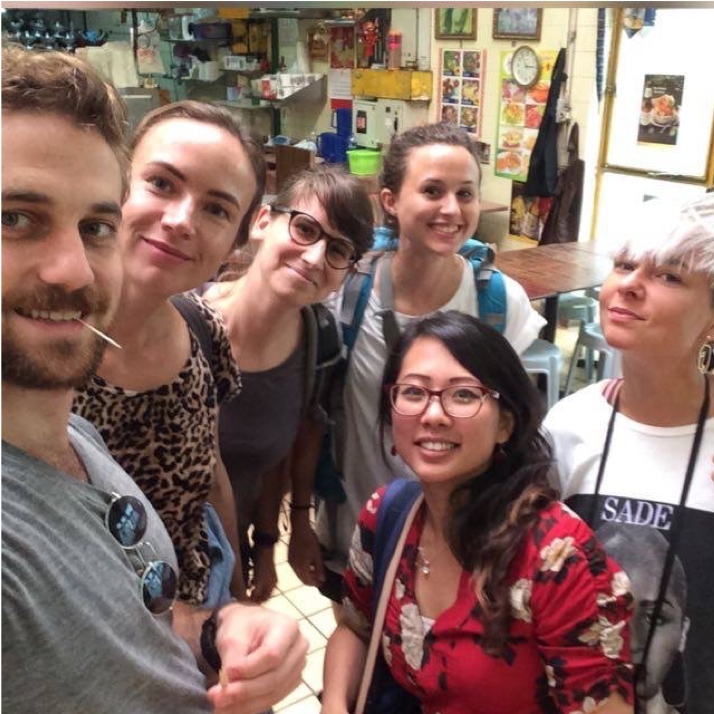
The design masters students of Zurich Hochschule der Künste (ZHdK) participate in a 2-week long international workshop on food in circular economy.
Workshop Description
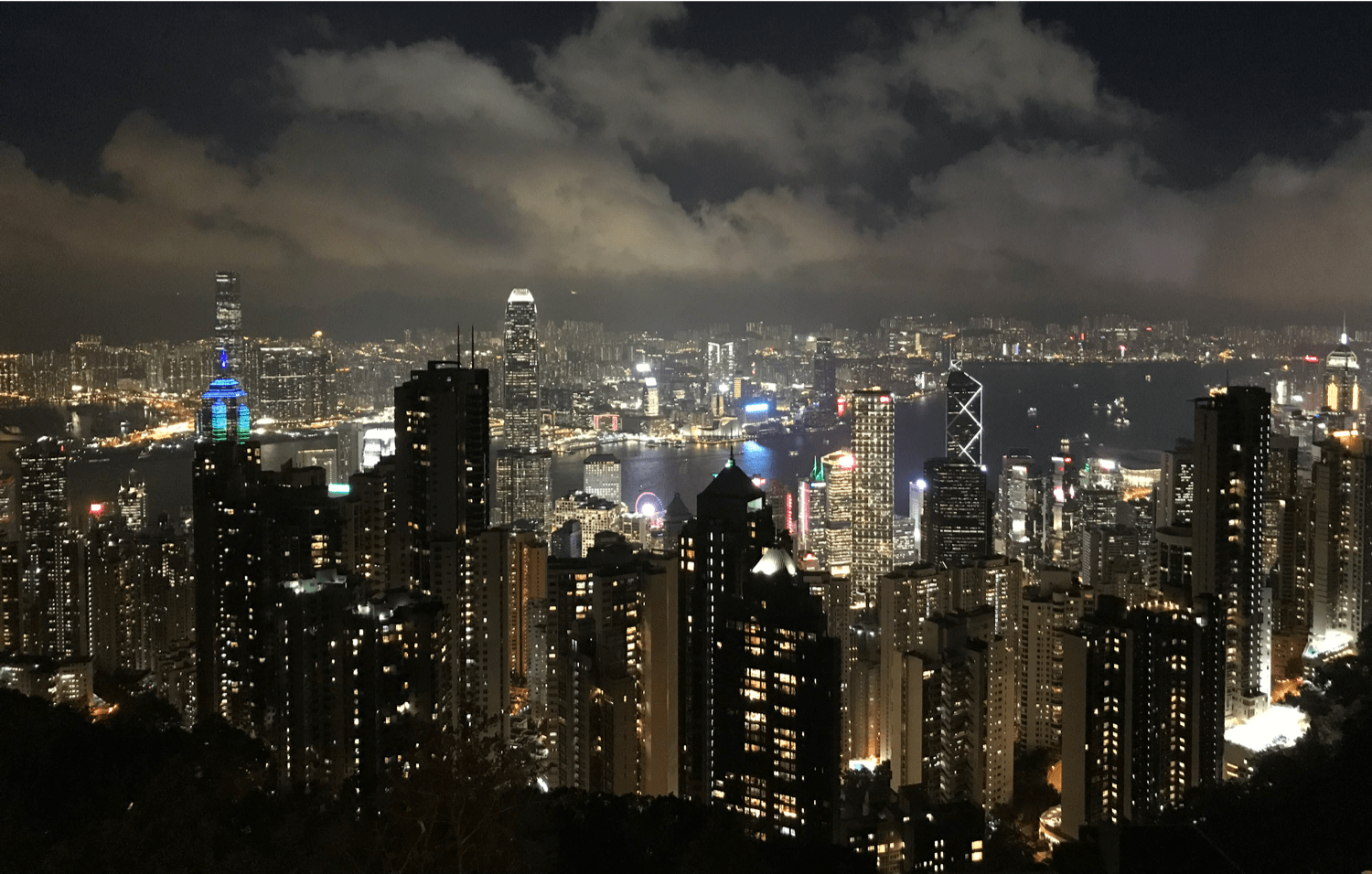
Welcome to Hong Kong! A city with a phenomenal variety of food, with some 26,000 registered restaurants [1] (compared with London’s 17,000). Yet this comes with high environmental impact and low social awareness as Hong Kong disposes 3,337 tonnes of food waste at the landfill every day[2] . The recent development of our civilization has way surpassed the Levi-Strauss’ crossroad from raw[3] to either cooked or rotten. We are slowly waking up to the fact that maybe the cultured side of food is no longer that preferable, as it is actually our culture of food that causes the current situation. Food is taken so much for granted that people tend to forget how complex producing it is. This complexity is as much a global as a local matter — we often consume food that has been produced 8000 kilometres away, and as individuals this is rarely considered. Design is a powerful tool to engage people and reflect on these very complex systems in a conceptual, concrete and visualized way. This workshop urges the participants to translate their own cultural experiences and learned skills to tackle a complex problem in a different cultural environment and food system as represented by Hong Kong’s relationship with food. In this workshop, design is not a way of making products or services, but rather used as an approach to create and express knowledge (Strappers & Giaccardi 2017). Furthermore, design participants are encouraged to define a new language and tool set in order to engage nonprofessional designers in this process of research-through-design (Ehn 1998). Design and the design process can be the key for people to immerse themselves into a possible future situation (Halse et al 2010) and so for opening up new kinds of future food systems.
[1] Food and environmental and Hygiene Department http://www.fehd.gov.hk/english/publications/annualrpt/2016/3.html
[2] Source: Hong Kong Environmental Protection Department, Government Statistical Office
[3] The Raw and the Cooked, Mythologiques, Claude Lévi-Strauss, 1964
Daily activities and challenges:
Wednesday 19. September
-Mini performance
-Find ingredients in the wet market for a traditional hong kong dish
-Reflect on our experiences
Thursday 20. September
-Performance
Friday 21. September
-Visit to food exchange
-Intervention
Monday 24. September
-Visit to the Vegetable Marketing Organization (VMO)
-Presented with four challenges:
1) Future Food Experiences
2) Food Safety at Home
3) Zero Food Waste
4) Locally Grown Food
Tuesday 25. September
How might we [problem to solve] through/by [doing something] so that we [create an impactful outcome].
In the morning, we brainstormed ideas for the four goals, and then filled out the blanks of the above statement. We then voted on the two best ideas for us to work on for the next 2-3 days.
The two winning concepts:
- How might we influence disposal behavior of consumers through visualization of damage to the environment in order to create awareness of the impact of food waste.
- How might we motivate people to support local grown food by letting people wear their own greenhouse so that we generate value and respect towards locally grown food.
In the afternoon, we got an informative talk from Viktor from FoodLink, a company that takes food waste from hotels and transports them to shelters for the poor.
Wednesday 26. September
Based on the two above ideas, we prepared our interventions and then met up with Albert at his atelier. After learning about his projects on creating empathy/awareness of the experience of dementia patients and also about parting with the loved ones who have passed away, we got feedback about our interventions over dim sum. After the feedback, we re-worked our intervention in preparation for Friday.
Thursday 27. September
We continued our preparation for the intervention
Friday 28. September
We tested our intervention with the locals and prepared for group presentations.
 ZHdK Food in Circular Economy